

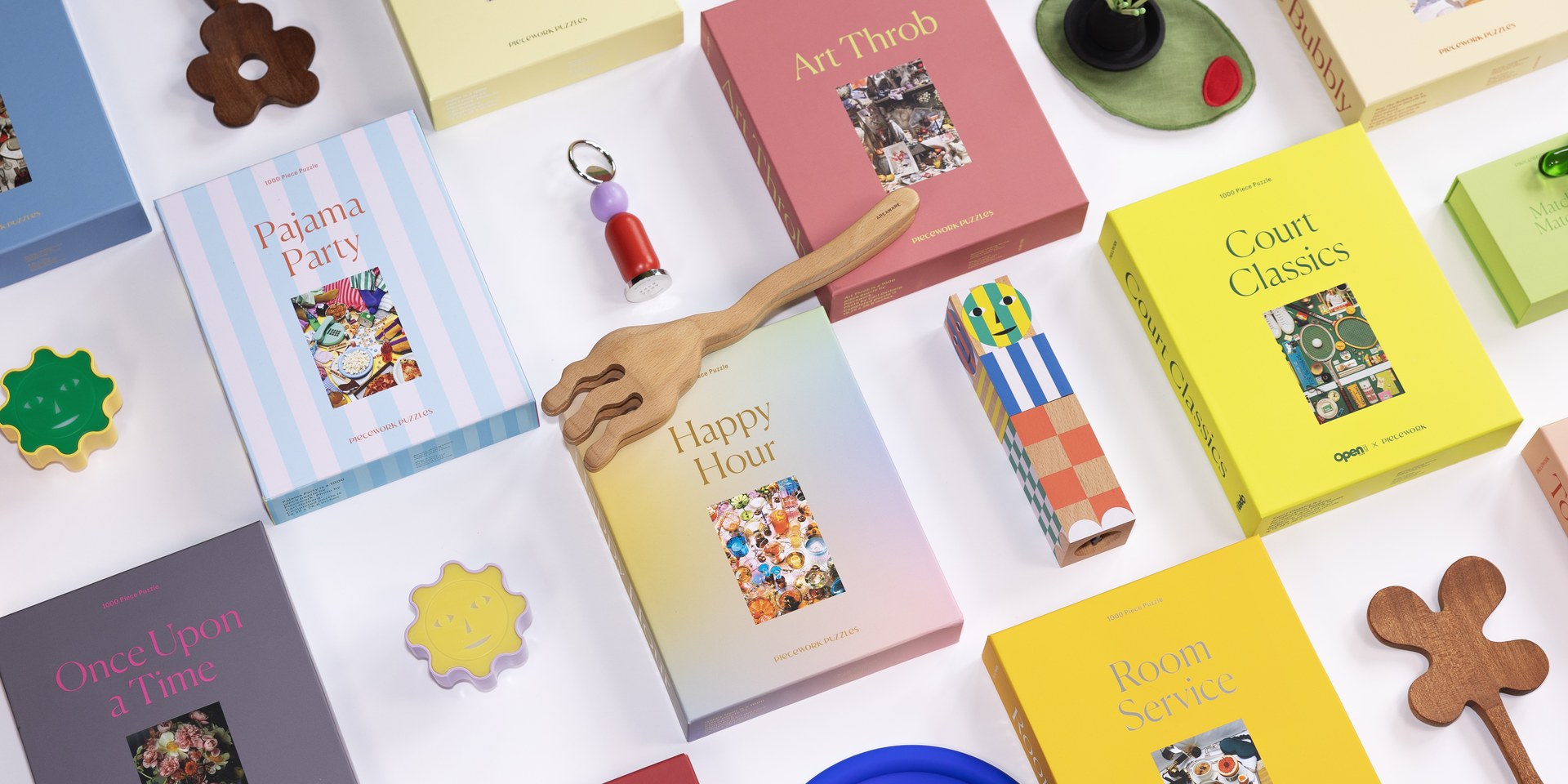
rachel hochhauser & piecework puzzles
Tape and Bubblegum: How Rachel Hochhauser Turned a Side Project Into Piecework Puzzles
We're creating space for the brains behind the brands we love, and asking good questions along the way. The result is a deep dive into the how and why of brand-building, from blueprints to launch day, customers as community and the detours in between. Big lessons, easy listening.
the Show Notes
In this episode of Read Receipt, Sean sits down with Rachel Hochhauser, co-founder of Piecework Puzzles, the art-forward puzzle brand whose puzzles look more like coffee table books than anything you'd find in a toy aisle.
Rachel started Piecework in 2019 with her co-founder Jena Wolfe as a creative side project while she was running her agency, Major Studio. It started with a rained-in cabin full of old jigsaw puzzles and four puzzles made with no shot list and no business plan. Then the pandemic puzzle boom hit, and Piecework had to grow up fast.
She gets into what came next: bringing on a president as co-owner to run the operations side, bootstrapping through tight cash cycles, and acquiring Areaware, the iconic design house Piecework had admired and stocked for years, while keeping it its own brand. She also shares why cocktail napkins, matches, and textiles now carry real weight next to puzzles, and her two pieces of advice for any brand going into wholesale: get to the right trade show, and get on Faire.
Tune in for an honest look at running two brands at once, writing a debut novel on the side, and why every small business is held together with tape and bubblegum.
Keywords
piecework puzzles, rachel hochhauser, areaware, puzzles, design, dtc, product design, brand building, bootstrapping, acquisition, wholesale, shoppe object, faire, read receipt, antidote
Takeaways
- The side project can become the business. Piecework started as a creative experiment Rachel ran alongside her agency, with no business plan. The pandemic puzzle boom forced it to "put on its big grown-up pants" and grow up fast.
- Validation before the wave matters. Piecework had press and trade-show pickup in its first holiday season (2019), so when COVID hit, Rachel knew people liked them specifically, not just any puzzle. That's what made it worth going all in.
- Bring in the other half of the brain. Piecework stayed a two-founder shop until it outgrew their bandwidth, then brought on a president (a former consultant) as co-owner to run ops, sales, and tech so the founders could stay on the creative side.
- Acquire a brand you already love. Piecework acquired Areaware, a design house it had admired and stocked for years, when Areaware shut down. The plan is to keep it a separate brand, honor its designer-partnership model, and add operational efficiency, not roll it up.
- Grow the catalog, not just the hero product. "Piecework is very much associated with puzzles," but napkins, matches, and textiles now carry real weight, and each new line deepens wholesale relationships that a puzzle alone wouldn't.
- You don't have to do one thing. Rachel runs two brands, wrote a debut novel, and has two young kids. Her honest take: she's "a very unbalanced person" who makes it work day by day, whatever needs her attention first.
Sound Bites
- I didn't have a business plan. I wasn't planning on growing it. It was just something I wanted to explore.
- It forced us to put on our big grown-up pants, so to speak.
- We have a saying: there's spreadsheets people and not-spreadsheets people. I know my way around a spreadsheet, but I'm not a spreadsheet person.
- It's not one clear, easy solve or Band-Aid. It's improving 10% across the board in everything we look at.
- Q4 out-earns the other three quarters combined.
- I got rained into a cabin with nothing to do but old jigsaw puzzles.
- "We showed up with boxes under our arms, and we didn't even get a booth." / "I am the show special. I got myself here."
- I think all small businesses are dysfunctional behind the scenes. They're all holding things together with tape and bubblegum in some ways.